
Calories Burned Calculator | Calories Burned by Activity
Figuring out how many calories you burn during a workout, a walk, or an ordinary day at home is one of the most common questions in fitness and weight management. A calories burned calculator gives you a science-based estimate by combining your body weight, the duration of an activity, and that activity’s metabolic equivalent, or MET, value. This guide explains exactly how that calculation works, what affects the result, and how to use the numbers to support real weight loss or fitness goals.
How your maintenance calories change with activity. Your selected level is highlighted.
| Activity level | Calories / day |
|---|
Body mass index is a general screening measure of weight relative to height.
Estimated with four widely referenced formulas, plus their average.
| Formula | Ideal weight |
|---|
Suggested daily protein, carb and fat targets for three common goals.
Daily calories needed to lose or gain weight at different paces.
To lose weight
| Pace | Per day | Per week |
|---|
To gain weight
| Pace | Per day | Per week |
|---|
One or more targets above fall below commonly recommended minimums (about 1,200 cal/day for women, 1,500 cal/day for men). Very low-calorie diets should only be followed under medical supervision.
Private by design. Every calculation runs in your browser and nothing you enter is stored on a server.
What Is a Calorie and Why Does It Matter?
A calorie is a unit used to measure energy. The food and drinks you consume provide calories, while your body uses those calories to power essential functions and physical activity.
Your body needs energy even when you are completely at rest. Your heart continues beating, your lungs continue working, and your brain and other organs continue using energy. This resting energy expenditure is an important part of your total daily calorie burn.
Calories also matter because your body weight is influenced by the relationship between energy consumed and energy used over time. If you regularly consume more energy than your body needs, the excess may be stored. If you consistently use more energy than you consume, your body can use stored energy.
However, your daily energy needs are not the same as someone else’s. This is why simply using an average number may not accurately answer how many calories does my body burn each day.
How a Calories Burned Calculator Works
A calories burned calculator estimates energy expenditure using three core inputs: the activity you performed, how long you did it, and your body weight. Behind the scenes, it applies a MET value, a standardized number representing how metabolically demanding an activity is compared with sitting quietly.
The MET values used by most reputable calculators come from the Compendium of Physical Activities, a research database originally developed at Stanford University and now maintained at pacompendium.com. The most recent version, the 2024 Adult Compendium, catalogs 1,114 specific activities across 22 major headings, and the large majority of those MET values are based on measured data rather than estimates. This is the same reference dataset that fitness apps, researchers, and government health agencies rely on, which is why MET-based calculators tend to produce comparable results regardless of which website hosts them.
One MET represents the energy your body uses at rest. It’s defined as roughly one kilocalorie per kilogram of body weight per hour, about equal to the energy cost of sitting quietly. An activity with a MET value of 5 requires five times the energy your body uses at rest. A brisk walk generally falls between 3 and 4 METs, while running at a fast pace can exceed 10 METs.
How Many Calories Do You Typically Burn in a Day?
The number of calories you burn each day depends on several factors, including your age, weight, height, activity level, and daily routine. Your body burns calories even while resting to support essential functions like breathing, circulation, and digestion. Daily movement, exercise, and other activities add to your total calorie burn.


Quick Fact
Your body burns calories throughout the day—even when you’re resting. Your total daily calorie burn depends on your BMR, movement, exercise, digestion, and daily activities.
Calculating Your Daily Calorie Burn
To estimate how many calories do I burn per day, start by estimating your BMR. BMR represents the energy your body needs to maintain essential functions while at rest. Your total daily calorie expenditure then includes physical activity and other energy use throughout the day.
Calculating Calories Burned: The MET Formula
The standard formula used to estimate calories burned from an activity’s MET value is:
Calories burned = MET x body weight (kg) x duration (hours)
Some calculators express this on a per-minute basis instead:
Calories burned = (MET x body weight in kg x 3.5) / 200 x duration (minutes)
Both versions produce the same result; they simply organize the same underlying relationship differently. Once you know an activity’s MET value, the calculation only requires converting your body weight to kilograms and your time to minutes, then applying the formula above.
To convert pounds to kilograms, divide your weight in pounds by 2.2.
Worked Examples
Real numbers make the formula easier to apply. Both examples below follow the calculation method published by Texas A&M’s Howdy Health program, using verified MET values.
Example 1:
Walking A person who weighs 165 pounds (75 kg) walks at a 3.0 mph pace, which is a 3.5 MET activity, for 45 minutes
Calories burned = 3.5 x 75 x 3.5 / 200 x 45 = about 207 calories
Example 2:
Mowing the lawn A person who weighs 180 pounds (82 kg) pushes a power mower, a 5.5 MET activity, for 60 minutes.
Calories burned = 5.5 x 82 x 3.5 / 200 x 60 = about 474 calories
These figures illustrate an important point: body weight and duration both scale the result directly, while the MET value determines how steep that scaling is. Doubling your duration roughly doubles the estimated calorie burn, and a heavier body weight increases the total at any given intensity.
Calorie Burn by Distance
For activities like walking, running, and cycling, some calculators let you enter a distance instead of a duration. This works because pace determines intensity, and intensity determines the MET value.

Walking
Walking a given distance at a slow, leisurely pace burns noticeably fewer calories than covering the same distance at a brisk pace.

Running
Running burns more calories per mile than walking because running is a higher-intensity, higher-MET activity even at a comparable speed.

Cycling
Cycling calorie burn depends heavily on speed and terrain. Leisurely cycling around 10 to 12 mph sits in a moderate MET range.
Distance-based estimates still rely on the same underlying formula. The calculator converts your pace into an implied duration, then applies the MET value that matches that intensity.
Daily Calorie Burn vs. Exercise Calories
Exercise calories are only one part of your total daily energy expenditure. Your body also burns calories while sleeping, working, walking, standing, digesting food, and maintaining basic functions.
This means the calories shown for a workout should not automatically be treated as your total daily calories burned. A TDEE calculator provides a broader estimate by considering your overall daily energy expenditure.

1.Running and Calorie Burn
Running is a popular way to increase calorie expenditure. The number of calories burned while running depends on body weight, pace, distance, duration, and intensity.
Running METs can be used to estimate the energy cost of different running speeds. A heavier person may burn more calories during the same activity, while a faster pace generally requires more energy.

2.Hill Running and Energy Expenditure
Hill running usually requires more energy than running on level ground because your muscles must work against gravity. The steepness of the hill, running speed, body weight, and duration can all affect the final calorie estimate.
3.Treadmill Running vs. Outdoor Running
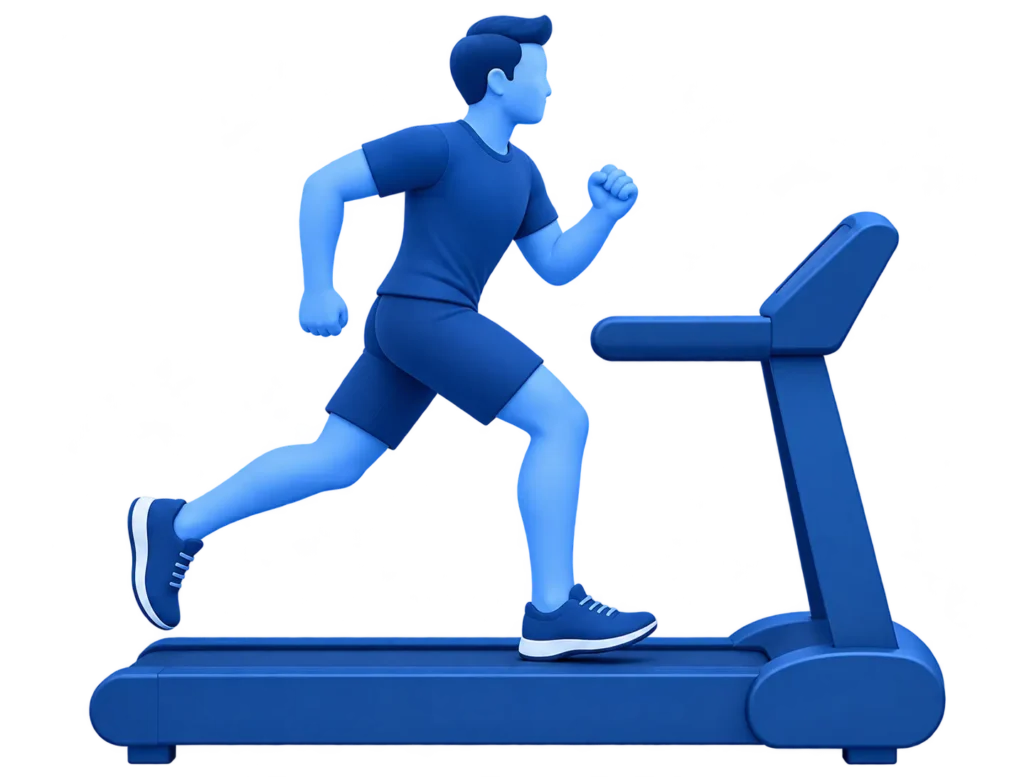
Treadmill and outdoor running may produce different calorie demands. Outdoor conditions such as wind, hills, terrain, and temperature can change energy expenditure, while treadmill incline and speed can be controlled more precisely.

4.Running With a Backpack
Carrying a backpack adds extra weight that your body must move. This can increase energy expenditure during walking or running, although the exact increase depends on backpack weight, speed, terrain, and duration.
5.Older Adults and Running
Age can influence calorie expenditure through changes in muscle mass, fitness, activity level, and movement efficiency. Older adults can choose walking, jogging, cycling, swimming, or other activities according to their fitness and comfort level.
Burn Calories and Support Heart Health With Fitness
Regular physical activity can support cardiovascular fitness and overall health. Walking, running, cycling, swimming, and strength training are examples of activities that can increase energy expenditure while helping you stay active.
The best activity is one you can perform consistently and safely as part of your normal routine.

Do Fats Make You Fat?
Eating dietary fat does not automatically cause body-fat gain. Weight change is influenced by overall energy balance, meaning the relationship between calories consumed and calories used.
Fat is also an important nutrient that supports normal body functions. Instead of focusing on one nutrient alone, consider your overall calorie intake and the quality of your diet.
Factors That Affect Calories Burned
MET-based estimates assume an “average” reference person, so several individual factors can shift your actual calorie burn above or below the estimate:
Body weight and composition
A heavier body, particularly one with more muscle mass, burns more calories performing the same activity than a lighter body does. Muscle is more metabolically active than fat tissue.
Age
As people age they tend to lose lean body mass, which lowers overall metabolic activity, so older individuals typically burn fewer calories than younger people performing the same task.
Exercise intensity
The more intense the exercise, the greater the number of calories burned. Intensity can be gauged through heart rate or, more precisely, through oxygen consumption.
Fitness level
A person who is in better physical condition tends to burn fewer calories performing the same exercise as someone less fit, because a trained body works more efficiently.
Environmental temperature
People generally burn more calories exercising in warmer conditions, since the body directs additional energy toward heat regulation.
Sleep
Inadequate sleep can reduce metabolism and lower overall activity levels, both of which can reduce total calories burned over time.
Because of these variables, MET values apply to an average adult and don’t fully account for individual physiology. Fitness level, age, body fat percentage, and muscle mass can all cause a person’s actual energy expenditure to differ from a calculator’s estimate.
Calories Burned by Common Activities
The table below organizes common activities by MET-based intensity category, following the light, moderate, and vigorous classification used in the Compendium of Physical Activities.
|
Intensity Level |
MET Range |
Example Activities |
|
Light |
Under 3.0 METs |
Slow walking (2.0-2.4 mph), light stretching, casual billiards, playing a musical instrument while seated |
|
Moderate |
3.0-5.9 METs |
Walking at 3-4 mph, golf while pulling clubs, low-impact aerobics, general resistance training, water aerobics |
|
Vigorous |
6.0 METs and above |
Running, racquetball, rope jumping, vigorous stationary cycling, high-impact step aerobics |
Light-intensity activities are non-sedentary behaviors under 3.0 METs, moderate-intensity activities fall between 3.0 and 5.9 METs, and vigorous-intensity activities require 6.0 METs or more. For reference, MET values across the full Compendium range from about 0.9 for sleeping up to 23 for running at 14 miles per hour.
What Exercise Burns the Most Calories?
Among commonly tracked activities, the exercises with the highest MET values, and therefore the fastest calorie burn per minute, tend to be:
- Running at a fast pace. Higher speeds push running well above 10 METs.
- Jumping rope at a fast cadence. Rope jumping performed quickly ranks among the higher vigorous-intensity activities.
- Vigorous stationary cycling. High-resistance or high-cadence cycling sessions carry a substantially higher MET value than moderate cycling.
- Swimming laps at a vigorous effort. Full-body, sustained swimming is metabolically demanding and burns calories efficiently for its time commitment.
- High-intensity interval training (HIIT) and circuit-style bodyweight training. Short bursts of near-maximal effort raise MET values significantly compared with steady-state moderate exercise.
The activity that burns the most calories for you personally also depends on body weight and how long you sustain the effort. A heavier person doing a moderate-intensity activity for a long duration can burn more total calories than a lighter person doing a brief high-intensity session.
Calories Burned at Rest: Understanding BMR
Not all calorie burn comes from exercise. Your basal metabolic rate (BMR) is the number of calories your body needs to maintain basic functions such as breathing, circulation, and cell repair while completely at rest. BMR typically accounts for the majority of most people’s total daily calorie expenditure, with physical activity making up the remainder.
BMR is influenced by many of the same factors that affect exercise calorie burn: body size, muscle mass, age, and sex all play a role. Someone with more lean muscle mass generally has a higher BMR than someone of the same weight with a higher body fat percentage, because muscle tissue demands more energy even when the body is inactive.
How Many Calories Does the Average Person Burn Daily?
There is no universal daily calorie-burn number for every adult. People have different body sizes, ages, body compositions, and activity levels. As a general concept, your resting calorie needs make up a significant portion of your total daily expenditure. Physical activity then adds to that amount.
For example:
Someone with a sedentary lifestyle may burn fewer total calories than someone who exercises regularly. A person with more muscle mass may also have different energy requirements than someone with the same body weight but a different body composition.
Therefore, if you are asking how many calories does a person burn a day, an individualized calculation is more useful than relying only on an average.
So, How Can You Calculate Your TDEE or Daily Calorie Needs?
TDEE stands for Total Daily Energy Expenditure. It represents the total amount of energy your body uses during an average day.
A common approach is to calculate your BMR first and then account for your activity level.
TDEE = BMR × Activity Factor
Common activity factors include
- Sedentary: BMR × 1.2
- Lightly active: BMR × 1.375
- Moderately active: BMR × 1.55
- Very active: BMR × 1.725
- Extremely active: BMR × 1.9
For example, if your BMR is 1,500 calories and you are moderately active:
1,500 × 1.55 = 2,325 calories
Your estimated TDEE would be about 2,325 calories per day.
TDEE is useful when you want to understand how many calories do I burn per day rather than looking only at calories burned from a particular workout.
How Many Calories Should I Burn a Day for Weight Loss?
Weight loss ultimately comes down to maintaining a calorie deficit, meaning you burn more calories than you consume over time. According to the CDC, a calorie deficit can be created by eating fewer calories, exercising more, or a combination of both.

The 3,500-Calorie Rule: What To Know
You may see weight loss guidance based on the idea that a pound of body fat equals roughly 3,500 calories, meaning a 500-calorie daily deficit should, in theory, produce about a pound of weight loss per week. This rule of thumb is still widely referenced, but it has real limitations. Research published on the topic has shown that this simple 3,500-calorie rule tends to overestimate actual weight loss, partly because the body’s calorie needs shift as weight changes, so a deficit that produces steady loss early on gradually produces less over time as metabolism adjusts.
Current Clinical Guidance
Current clinical guidance tends to favor a more conservative approach. For adults with a BMI between 27 a/nd 35, a deficit of 300 to 500 calories per day is a common recommended starting point, producing roughly half a pound to a pound of weight loss per week, while a larger 500-to-1,000-calorie deficit is generally reserved for people with a BMI of 35 or higher.
|
BMI |
Common Starting Deficit |
|
27 – 35 |
300 – 500 calories/day |
|
35+ |
500 – 1,000 calories/day |
In Practical Terms
01
Estimate Exercise Calories
Use a calories burned calculator to estimate how much exercise adds to your daily energy expenditure.
02

Check Maintenance Calories
Compare that against your estimated calories needed for maintenance.
03
Choose Moderate Deficit
Aim for a moderate, sustainable deficit rather than an aggressive one, since large deficits are harder to maintain and can affect energy levels and muscle mass.
04

Adjust Gradually
Adjust gradually, since actual results vary from person to person based on metabolism, activity level, and how the body adapts over time.
Physical Activity Guidelines
The federal Physical Activity Guidelines for Americans recommend at least 150 minutes of moderate-intensity activity, or 75 minutes of vigorous-intensity activity, per week for general health, which corresponds to the moderate and vigorous MET categories described earlier in this guide.
How to Use Calorie Counting to Support a Healthy Body Composition?
Understanding your calorie expenditure can help you make more informed decisions about food intake and physical activity.
If your goal is weight management, you can compare your estimated calorie intake with your estimated TDEE. A consistent calorie deficit may contribute to weight loss, while eating around your estimated maintenance needs may help maintain body weight.
Your results can vary over time because your body adapts to changes in weight, activity, and calorie intake. Therefore, calorie calculations should be treated as useful estimates rather than exact numbers.
Use a Calorie Calculator
A calorie calculator can make it easier to estimate your energy expenditure without manually performing every calculation. Depending on the calculator, you may enter information such as:
- Weight
- Activity type
- Exercise duration
- Distance
- Activity intensity
The result can help you understand the approximate energy cost of an activity and answer questions such as how many calories do I burn during walking, running, cycling, or other exercises.
Track Your Macronutrients
Calories are only one part of your overall nutrition. Macronutrients include protein, carbohydrates, and fat, which provide energy and support different functions in the body.
Tracking your macronutrients along with your total calorie intake can give you a better understanding of your overall diet. Protein, in particular, plays an important role in maintaining and building muscle.
Rather than focusing only on the number of calories burned, consider your overall eating pattern, activity level, and nutritional needs.
How Accurate Are Calories Burned Calculators?
MET-based calculators are useful for comparing activities and tracking general trends, but they are estimates, not precise measurements. The standard 1-MET reference value was derived from a single healthy 40-year-old male weighing 70 kilograms, and some research indicates this convention can overestimate resting oxygen consumption by 20 to 30 percent on average for some individuals, meaning results will be less accurate for anyone whose metabolism differs meaningfully from that reference.
Real-world activity also rarely happens at a perfectly constant intensity. An hour of tennis, for example, may include breaks between points or games, which means the body isn’t working at the assumed MET level for the entire recorded duration. This typically leads calculators to overestimate calories burned when rest periods aren’t factored in.
Getting a highly precise, individualized number would require lab testing that measures a person’s maximum oxygen capacity and other physiological markers directly. For everyday use, MET-based estimates remain the most practical and widely validated approach, and they’re most useful as a tool for comparing relative intensity between activities rather than as an exact calorie count.