
Macro Calculator: Find Your Ideal Daily Macros
How your maintenance calories change with activity. Your selected level is highlighted.
| Activity level | Calories / day |
|---|
Body mass index is a general screening measure of weight relative to height.
Estimated with four widely referenced formulas, plus their average.
| Formula | Ideal weight |
|---|
Suggested daily protein, carb and fat targets for three common goals.
Daily calories needed to lose or gain weight at different paces.
To lose weight
| Pace | Per day | Per week |
|---|
To gain weight
| Pace | Per day | Per week |
|---|
One or more targets above fall below commonly recommended minimums (about 1,200 cal/day for women, 1,500 cal/day for men). Very low-calorie diets should only be followed under medical supervision.
Private by design. Every calculation runs in your browser and nothing you enter is stored on a server.
Figuring out exactly how much protein, carbs, and fat to eat every day sounds complicated, but it comes down to a handful of numbers: your body stats, your activity level, and your goal. A macro calculator turns those inputs into a personalized daily target, so you know exactly what to aim for instead of guessing.
This guide walks through how a macro calculator works, how to use one correctly, and how to adjust your results depending on whether you want to lose fat, maintain your current weight, or build muscle.
What Are Macronutrients (Macros)?
Macronutrients, usually shortened to “macros,” are the three nutrients your body needs in large amounts to function: protein, carbohydrates, and fat. Unlike micronutrients (vitamins and minerals, which your body needs only in small amounts), macros are measured in grams and provide nearly all of your daily energy, or calories.
Each macronutrient supplies a different number of calories per gram:
Protein
Builds and repairs muscle, skin, and other tissue
4 Calories per gram
Carbohydrates
Main fuel source for the brain and muscles
4 Calories per gram
Fat
Supports hormone production, cell structure, and nutrient absorption
9 Calories per gram
Protein is made of amino acids, several of which your body cannot produce on its own and has to get from food. Good sources include poultry, fish, eggs, dairy, legumes, tofu, and lean cuts of red meat.
Carbohydrates break down into glucose, which fuels your brain, central nervous system, and working muscles. Carbs come in simple forms (sugars) and complex forms (starches and fiber), with whole grains, fruits, vegetables, and legumes offering the most nutritional value.
Fat is the most calorie-dense macronutrient. It supports cell membranes, vitamin absorption, and hormone production. Keep saturated fat under 10% of calories and choose unsaturated fats from olive oil, nuts, and fatty fish.
How to Use This Free Macro Calculator
A macros calculator free of guesswork needs just a few inputs to generate accurate results:
- Sex (male or female): affects the baseline metabolic rate formula.
- Age: metabolism gradually slows with age.
- Height and weight: larger bodies generally burn more calories at rest.
- Activity level: how much structured exercise and daily movement you do.
- Goal: weight loss, maintenance, or muscle gain.
Once you enter these, the calculator estimates your Basal Metabolic Rate (BMR), multiplies it by an activity factor to get your Total Daily Energy Expenditure (TDEE), and then splits your target calories into protein, carbs, and fat based on your goal.
How Macro Calculators Work: BMR, TDEE, and Activity Multipliers
Behind every calorie macro calculator is a two-step process: estimating how many calories your body burns at rest, then adjusting for how active you are.
Step 1: Calculate BMR
The most widely used and validated formula for this is the Mifflin-St Jeor equation, developed in 1990 and generally considered more accurate than older formulas like Harris-Benedict for most adults:
Men
BMR = (10 × weight in kg) + (6.25 × height in cm) − (5 × age in years) + 5
Women
BMR = (10 × weight in kg) + (6.25 × height in cm) − (5 × age in years) − 161
Some calculators offer the Katch-McArdle formula instead, which factors in lean body mass and can be more precise for people who already know their body fat percentage.
Step 2: Multiply by an Activity Factor
BMR only reflects the calories your body burns doing nothing, lying in bed all day. To estimate your real-world calorie needs (TDEE), that number gets multiplied by an activity multiplier:
|
Activity level |
Description |
Multiplier |
|
Sedentary |
Little to no exercise, desk job |
1.2 |
|
Lightly active |
Light exercise or sports 1 to 3 days a week |
1.375 |
|
Moderately active |
Moderate exercise 3 to 5 days a week |
1.55 |
|
Very active |
Hard exercise 6 to 7 days a week |
1.725 |
|
Extra active |
Very hard exercise, physical job, or training twice a day |
1.9 |
The result is your maintenance calories, the number of calories that keeps your weight stable. From there, the calculator adjusts up or down depending on whether your goal is fat loss or muscle gain, and finally splits the total into grams of protein, carbs, and fat.
Daily Calorie Needs by Sex and Activity Level
According to the USDA’s Dietary Guidelines for Americans, average calorie needs range from about 1,600 to 2,400 calories a day for women and 2,000 to 3,000 calories a day for men, depending on age and activity level. These figures are a general starting point. Your actual number depends heavily on your individual height, weight, and activity, which is why a personalized calculator gives a far more accurate estimate than a generic chart.
Someone tall, young, muscular, and active will need noticeably more calories than someone shorter, older, and largely sedentary, even if they’re the same sex. This is exactly why macro calculators ask for individual stats rather than relying on age and sex alone.
How to Calculate Macros for Weight Loss, Maintenance, and Muscle Gain
Once you know your daily calorie target, the next step is splitting it into protein, carbs, and fat. The right split shifts depending on your goal.

Macros for Fat Loss
A calories deficit drives fat loss, but protein ,carbs , and fat effect how much muscle you retain and how manageable the diet feels.
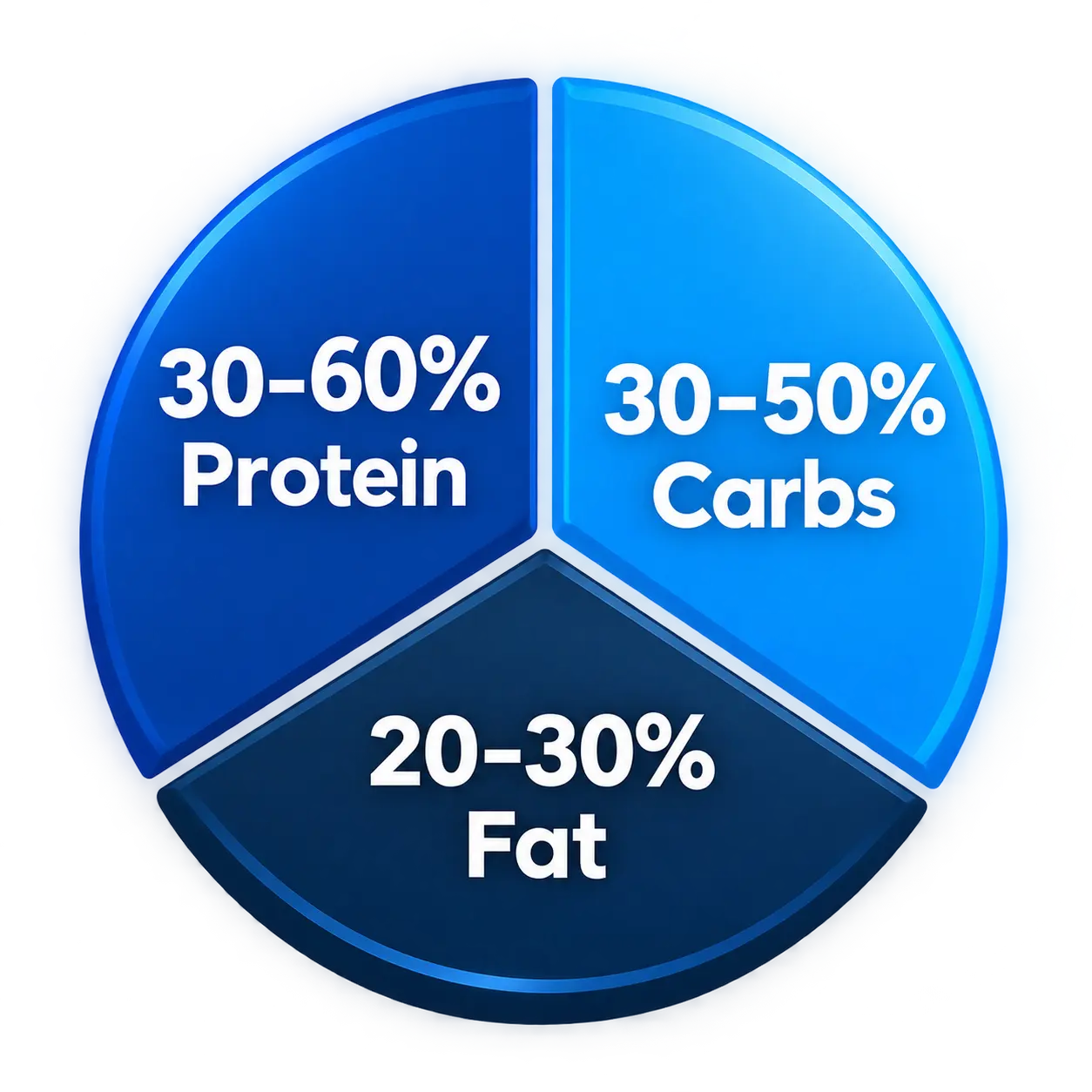
- Protein: 0.7-1 g per ib (30-40% cal) (0.4-0.05 g for higher body fat)
- Carbs: 30%-50% of calories
- Fat: 20%-30% of calories
Higher protein helps preserve lean muscle mass during a deficit.

Macros for Maintenance
At maintenance, the calorie target stays close to your TDEE, and the macro split has more flexibility.
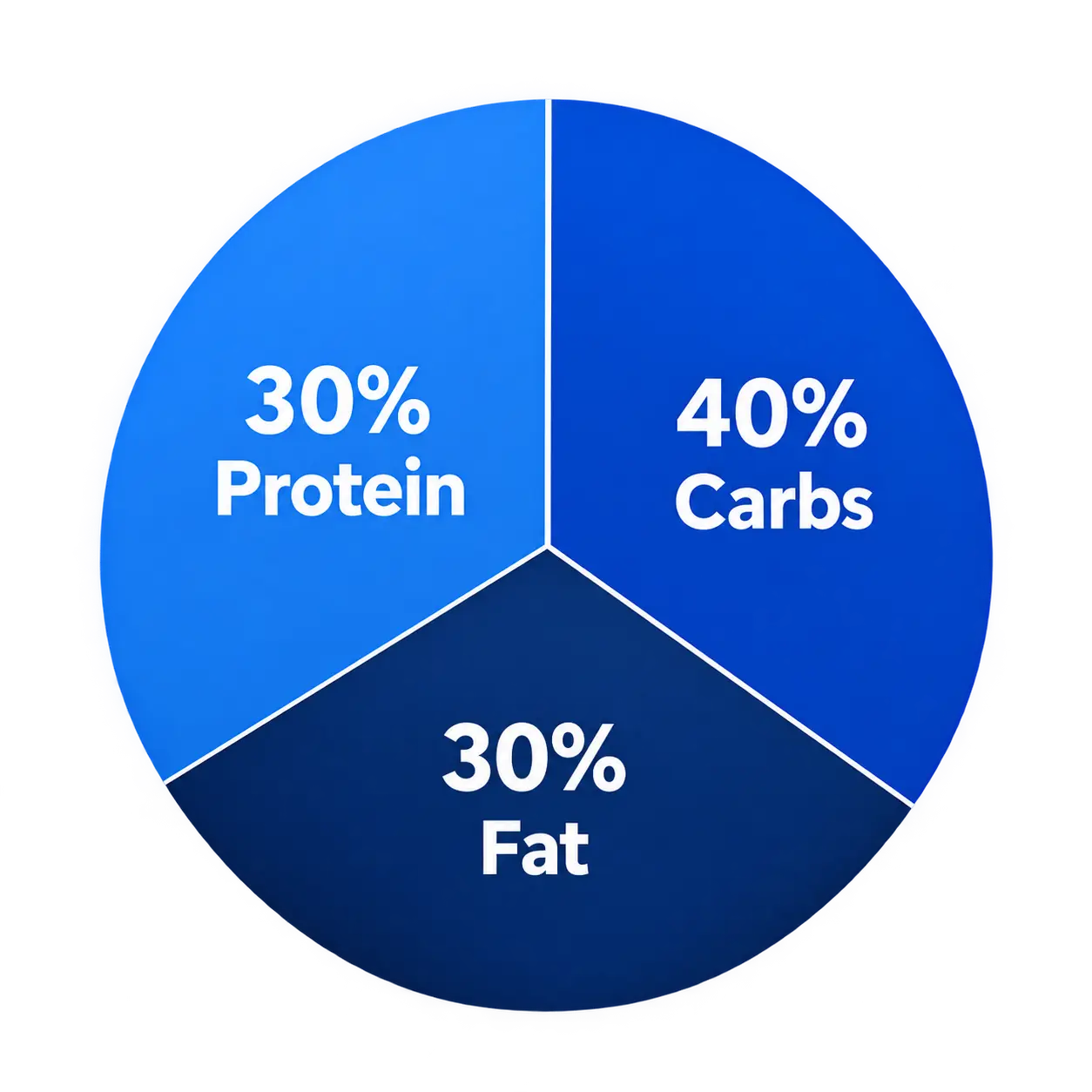
- Protein: 0.7-1 g per ib
- Carbs: -40% of calories
- Fat: -30% of calories
Any combinations that hits your calories and protein targets while fitting your lifestyle works.

Macros for Muscle Gain
Building muscle requires a modest calorie surplus paired with adequate protein and resistance training. General guidelines for a lean muscle-building phase are:
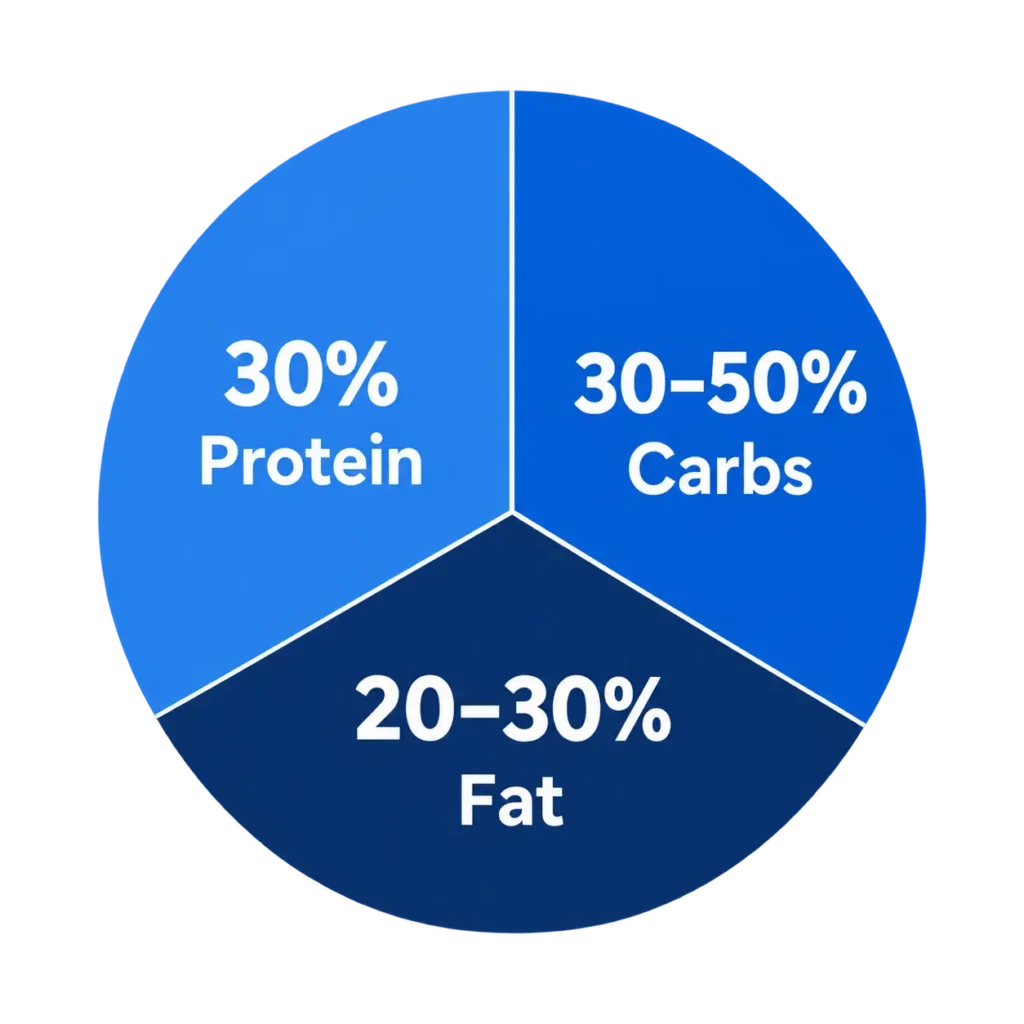
- Protein: 0.7-1 g per ib
- Carbs: 30%-50% of calories
- Fat: 20%-30% of calories
Avoid a large surplus – a small controlled surplus (few hundred calories) is best.
Common Macro Distribution Patterns
|
Style |
carb / protein / fat split |
Typical use case |
|
Balanced |
40% / 30% / 30% |
General health, maintenance |
|
High-protein |
30% / 40% / 30% |
Fat loss, muscle preservation |
|
Low-carb |
20% / 30% / 50% |
Blood sugar management, personal preference |
|
High-carb |
55% / 20% / 25% |
Endurance training, high training volume |
|
Ketogenic |
5-10% / 20-25% / 65-75% |
Specific medical or performance contexts |
There’s no single “correct” split for everyone. The right ratio depends on your goal, training style, food preferences, and how your body responds
Macronutrients in Common Foods
|
Food |
Serving |
Protein |
Carbs |
Fat |
|
Chicken breast, cooked |
3 oz |
26g |
0g |
3g |
|
Egg, large |
1 |
6g |
0.4g |
5g |
|
Salmon, cooked |
3 oz |
22g |
0g |
11g |
|
Greek yogurt, plain |
1 cup |
20g |
8g |
0g |
|
Brown rice, cooked |
1 cup |
5g |
45g |
2g |
|
Oats, dry |
1/2 cup |
5g |
27g |
3g |
|
Food |
Serving |
Protein |
Carbs |
Fat |
|
Sweet potato |
1 medium |
2g |
24g |
0g |
|
Broccoli |
1 cup |
3g |
6g |
0g |
|
Almonds |
1 oz (23 nuts) |
6g |
6g |
14g |
|
Avocado |
1/2 fruit |
2g |
9g |
15g |
|
Olive oi |
1 tbsp |
0g |
og |
14g |
|
Peanut butter |
2 tbsp |
7g |
6g |
16g |

For packaged foods, use the nutrition facts label
For whole foods without a label, a food database like the USDA Food Data Central tool gives verified gram counts by weight
Benefits and Drawbacks of Tracking Macros
Tracking macros gives you more control over body composition than calorie counting alone, since it accounts for how different foods affect muscle retention, satiety, and energy levels. It also supports a flexible approach to eating: instead of banning entire food groups, you can fit almost any food into your day as long as it matches your targets.
That flexibility is also its biggest challenge. Hitting precise gram targets requires weighing food and logging consistently, which takes more effort than simply watching total calories. It can also become mentally taxing for people prone to rigid or anxious eating patterns, in which case a simpler calorie-focused approach, or working with a registered dietitian, may be a better fit.
Macro Calculator vs. Calorie Counting: Which Should You Use?
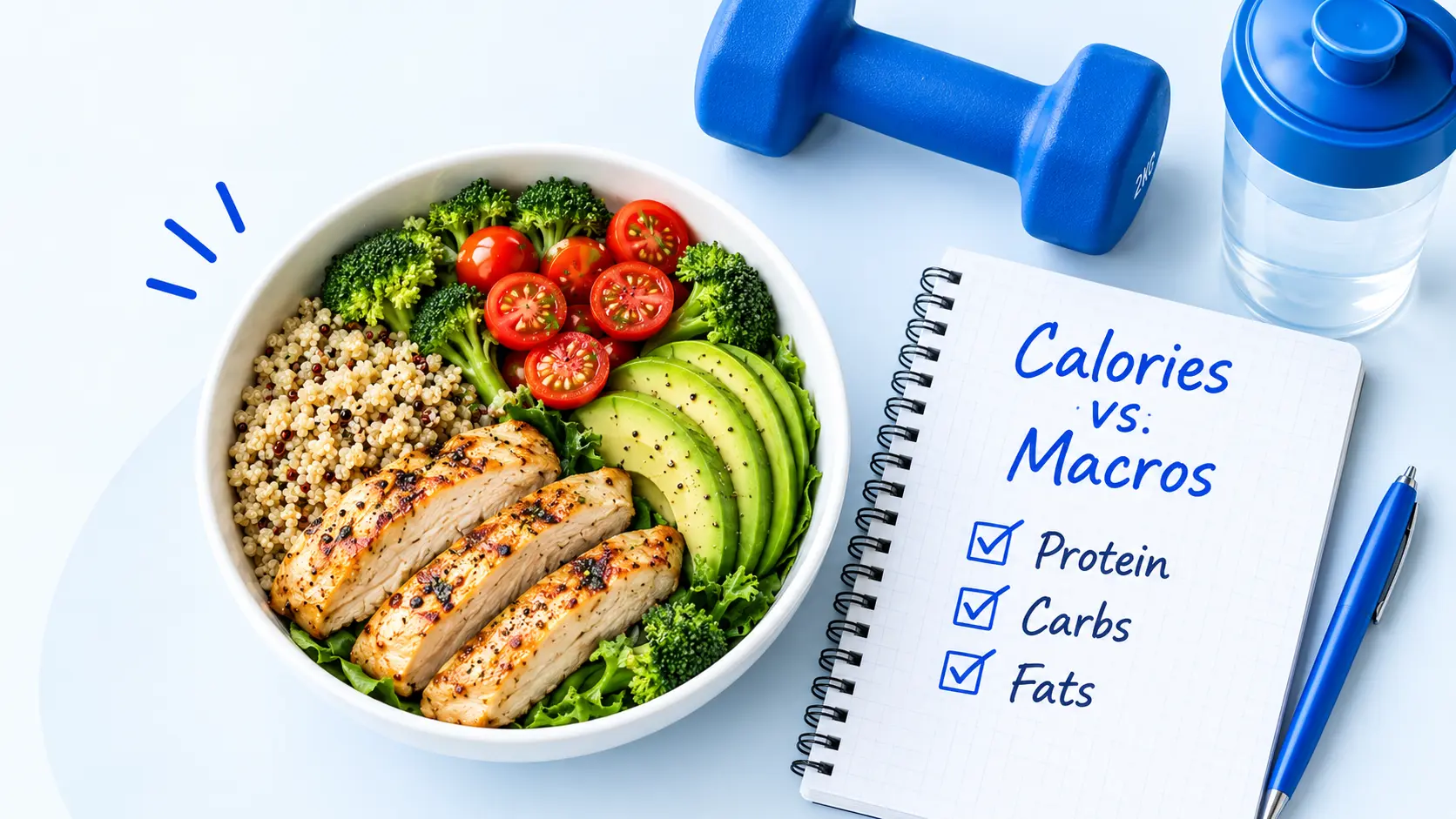
Calories determine whether you gain, lose, or maintain weight. Macros determine the quality of that weight change, meaning whether it comes primarily from fat or includes meaningful muscle loss or gain.
For pure weight management, tracking calories alone can work. For body recomposition, athletic performance, or preserving muscle during a diet, tracking macros gives noticeably better control.

Calories Only
Good for weight management.
Best for: General weight management and simple goal.

Macros (Protein, Carbs, Fats)
Better for body composition and performance.
Best for: Body recomposition, muscle gain/loss and athletic goals.
Most people get the best results by treating calories as the primary lever and macros, especially protein, as the secondary lever that protects muscle and keeps the diet sustainable.
How TDEE Connects to Your Macro Targets
Your Total Daily Energy Expenditure (TDEE) is the foundation every macro calculation is built on. It represents the total calories you burn in a day, including your BMR, digestion, daily movement, and exercise. A macro calculator essentially works backward from TDEE: it adjusts that number up or down based on your goal, then converts the resulting calorie target into grams of protein, carbs, and fat.
This is why accuracy matters at the TDEE stage. If your activity level input is too high or too low, every macro number that follows will be off, even if the underlying formula is correct. When in doubt, it’s better to slightly underestimate your activity level and adjust your calorie target after a few weeks of real-world tracking than to overestimate it from the start.